
What actually grows on a hull
Fouling arrives in stages. Within days of a clean, a biofilm of bacteria and microalgae forms — the slippery slime you feel on a waterline. Within weeks in warm water, soft growth follows: algae, weed, and hydroids. Left longer, hard growth takes hold — barnacles and tube worms that cement themselves to the surface and are far harder to remove without damaging paint.
The Mediterranean makes this fast. Warm, nutrient-rich harbour water above 20 °C is ideal for growth, and rising sea temperatures are extending the fouling season further each year.
What fouling costs you
- Fuel: a fouled hull can increase fuel consumption by up to 20%. Over a Mediterranean season, that's routinely thousands of pounds.
- Speed and handling: drag costs knots at the same revs, and a rough hull steers heavier and responds slower.
- Emissions: every extra litre burned is extra CO₂ — increasingly relevant as marinas and flag states tighten environmental expectations.
- Antifouling life: heavy growth degrades the coating beneath it, dragging haul-outs and repaints forward.
How often should you clean?
The honest answer depends on water temperature, berth location, and how much you move the boat — a vessel that sits still fouls faster than one that runs regularly. As a rule of thumb for Gibraltar and the Western Mediterranean:
| Season | Frequency | Why |
|---|---|---|
| Warm months (May–Oct) | Every month | Growth accelerates sharply above 20 °C |
| Cool months (Nov–Apr) | Every 3 months | Growth slows but never fully stops |
Frequent light cleans beat occasional heavy ones. Removing slime and soft growth monthly is gentle on paint; letting barnacles establish and then scraping them off is not.
Doesn't antifouling paint handle this?
Less than it used to. Antifouling slows growth — it doesn't prevent it, especially in warm water on a boat that sits at its berth. Regulations have also removed the most aggressive biocides from modern coatings, so today's paints rely on being kept clean to stay effective. The combination that works is good antifouling plus regular gentle cleaning: the clean removes growth before it bonds, and the paint keeps working underneath.
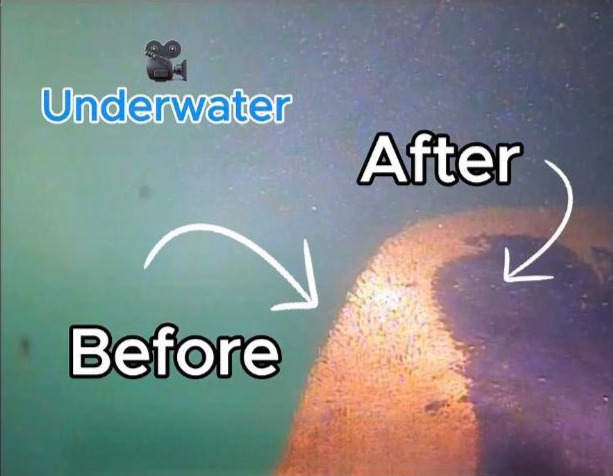
This is why cleaning method matters. Hard scraping strips paint with the growth. Our robotic clean uses soft counter-rotating brushes designed to leave coatings intact — regular robotic cleaning typically extends antifouling life.
What about the water?
Cleaning a fouled hull in the water releases everything that comes off it — including paint particles and invasive species — unless the debris is captured. That's why some harbours restrict in-water cleaning entirely. Our robot filters everything it removes through a 50–180 micron onboard bag, so nothing enters the sea, and the waste goes ashore. It's the version of in-water cleaning that marinas are comfortable with.
The short version
- Fouling starts within days and gets expensive within weeks.
- Budget roughly 20% extra fuel for a neglected hull.
- Clean monthly in season, quarterly in winter.
- Gentle and frequent beats aggressive and rare — your antifouling will last longer.
- Insist on waste capture for any in-water clean.
Put your hull on a schedule
The annual package covers the rhythm above: four cleans a year for the price of three, with a free propeller clean by our diver.
Get a free quote